
Join The Fight Against
Amyloidosis
Active Members
We have now a community of 700+ members. Each individual strengthens our mission, Together we can move with purpose and make a change
Patients
Caregivers
Join Our Mission
Doctor’s Connected
We have 170+ experienced doctors connected with us, providing trusted guidance, medical expertise and support
Become a Volunteer
Your Support Matter! Join our mission to provide hope, care, and oppurtunities who need it most
Act Now
Save Tomorrow
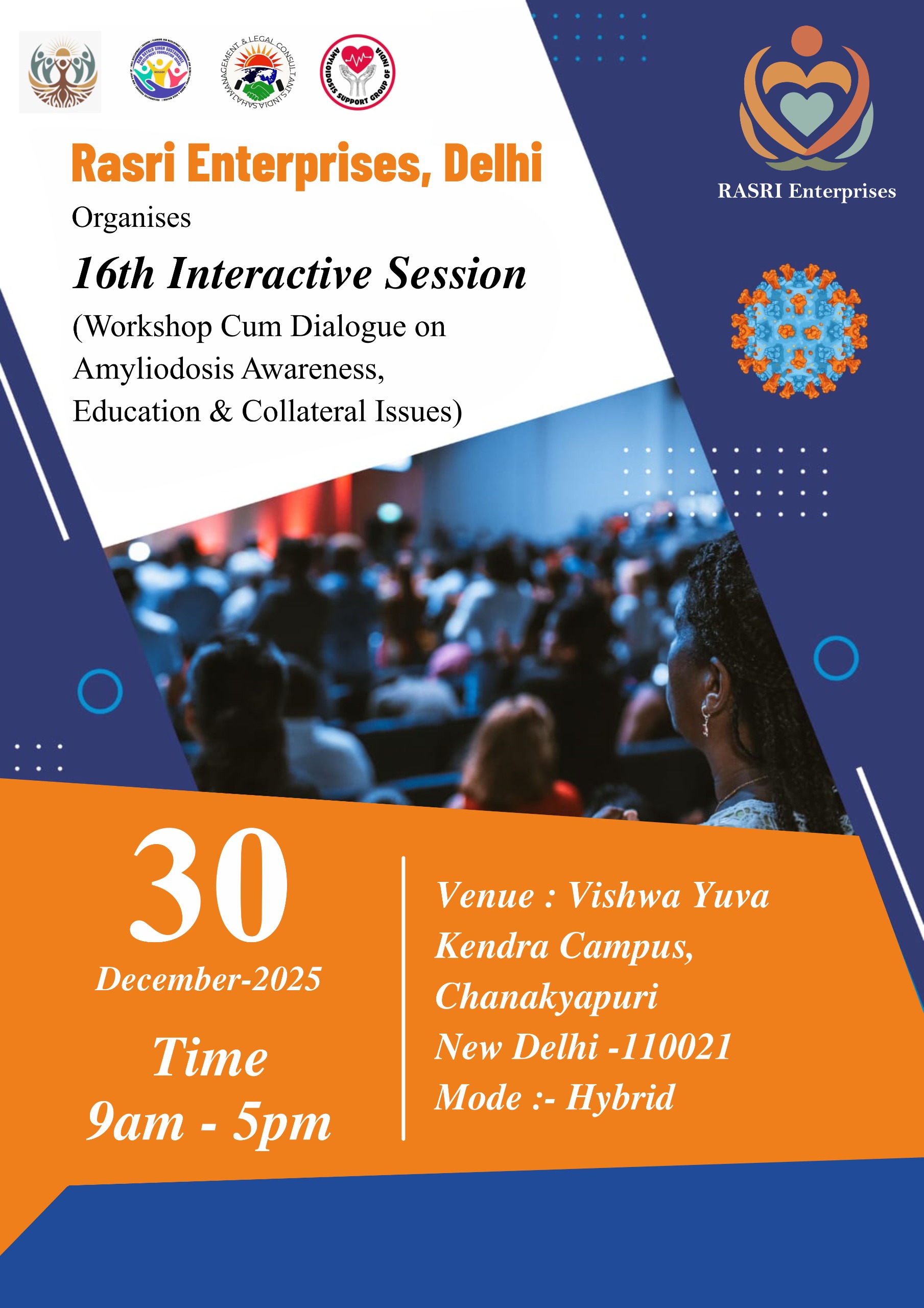
Amyloidosis Event
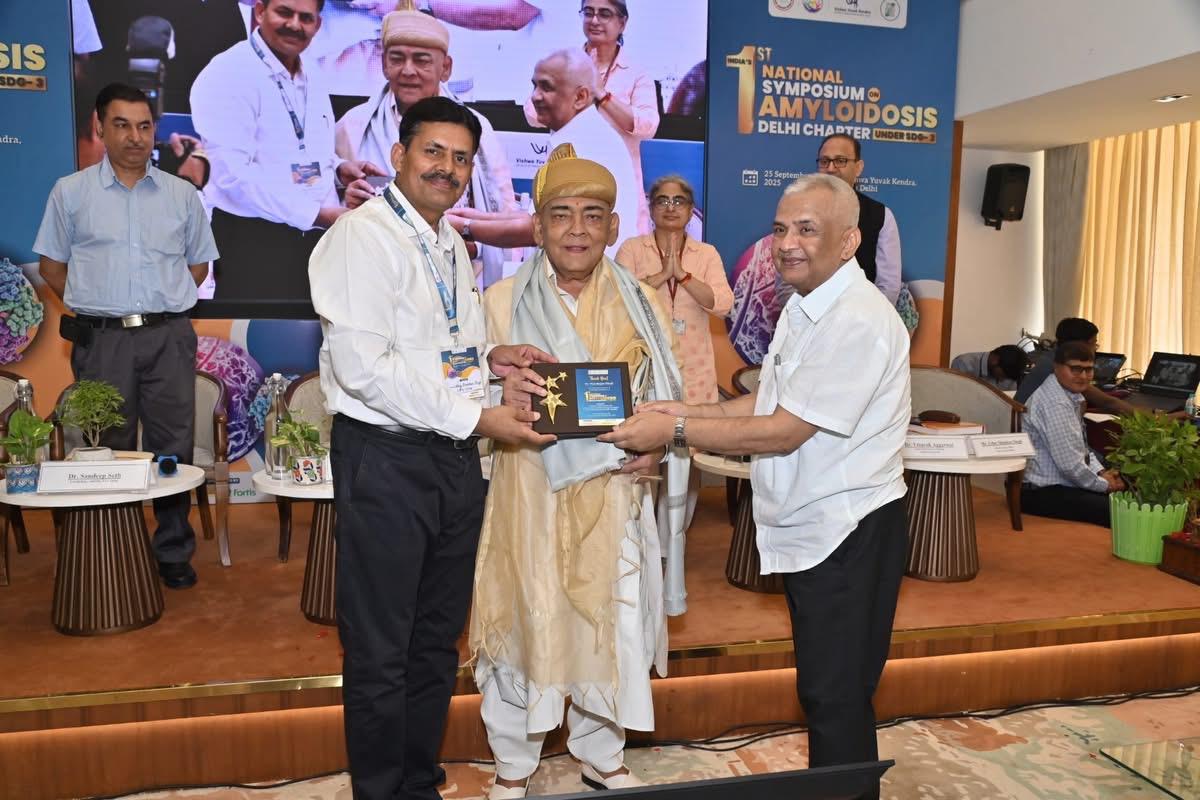
Our Event
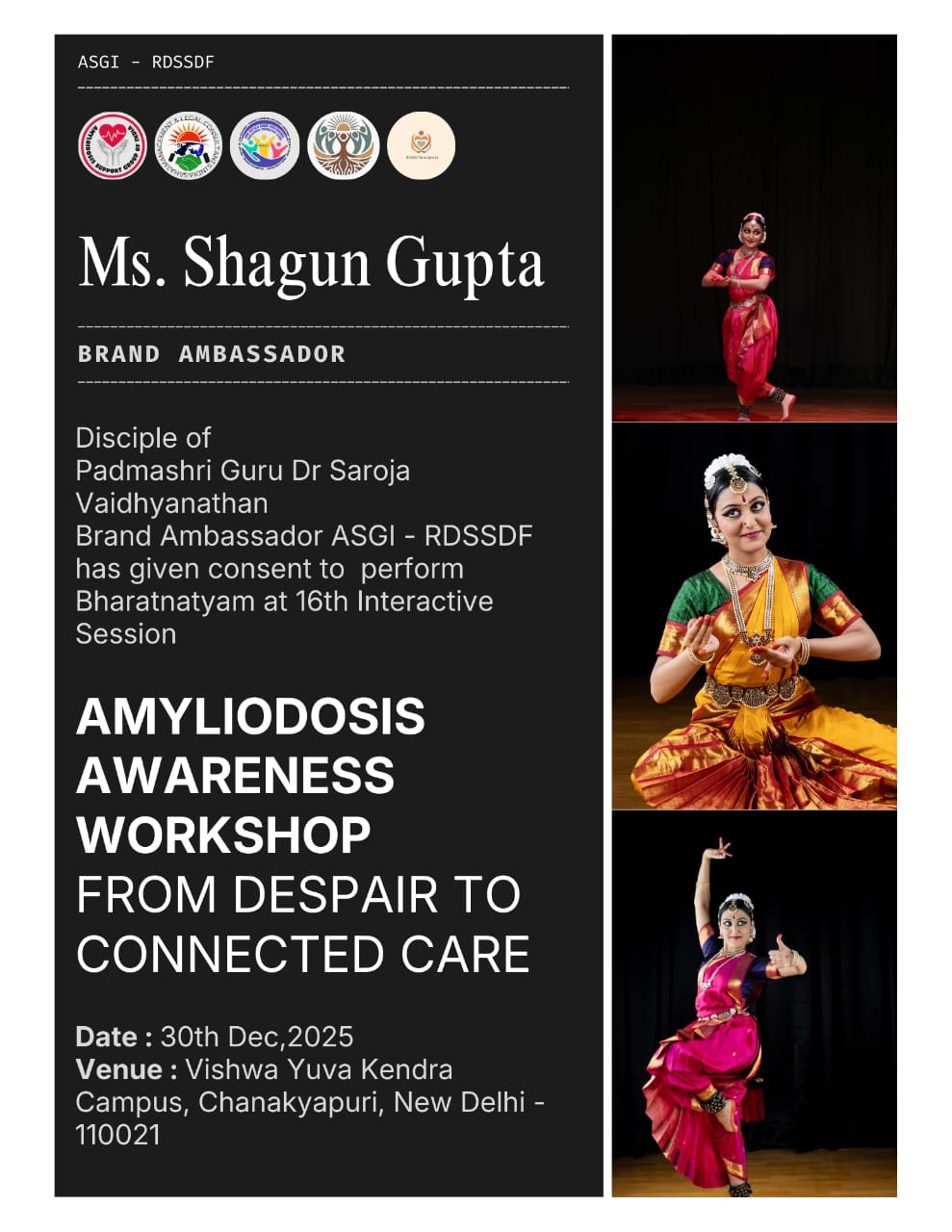
Our Brand Ambassador
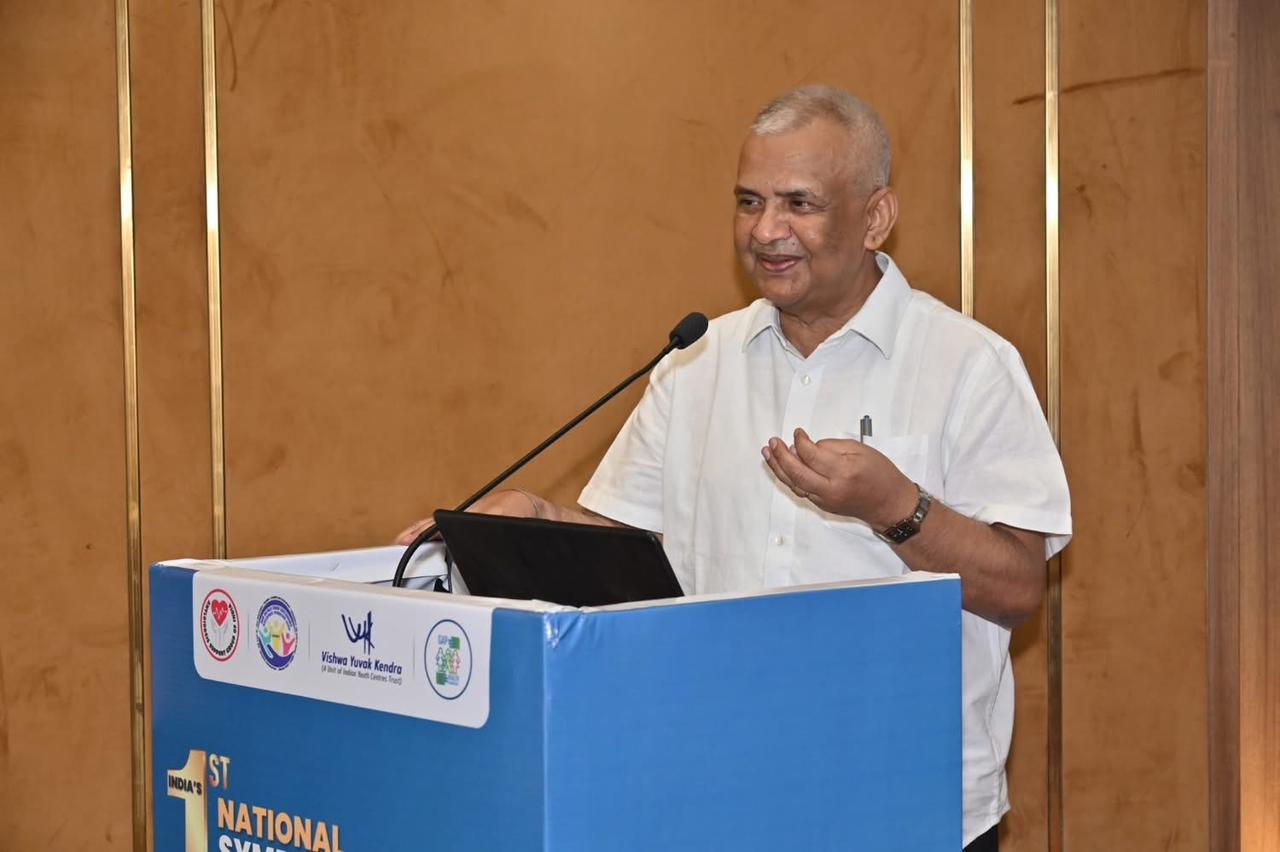
Our Founder
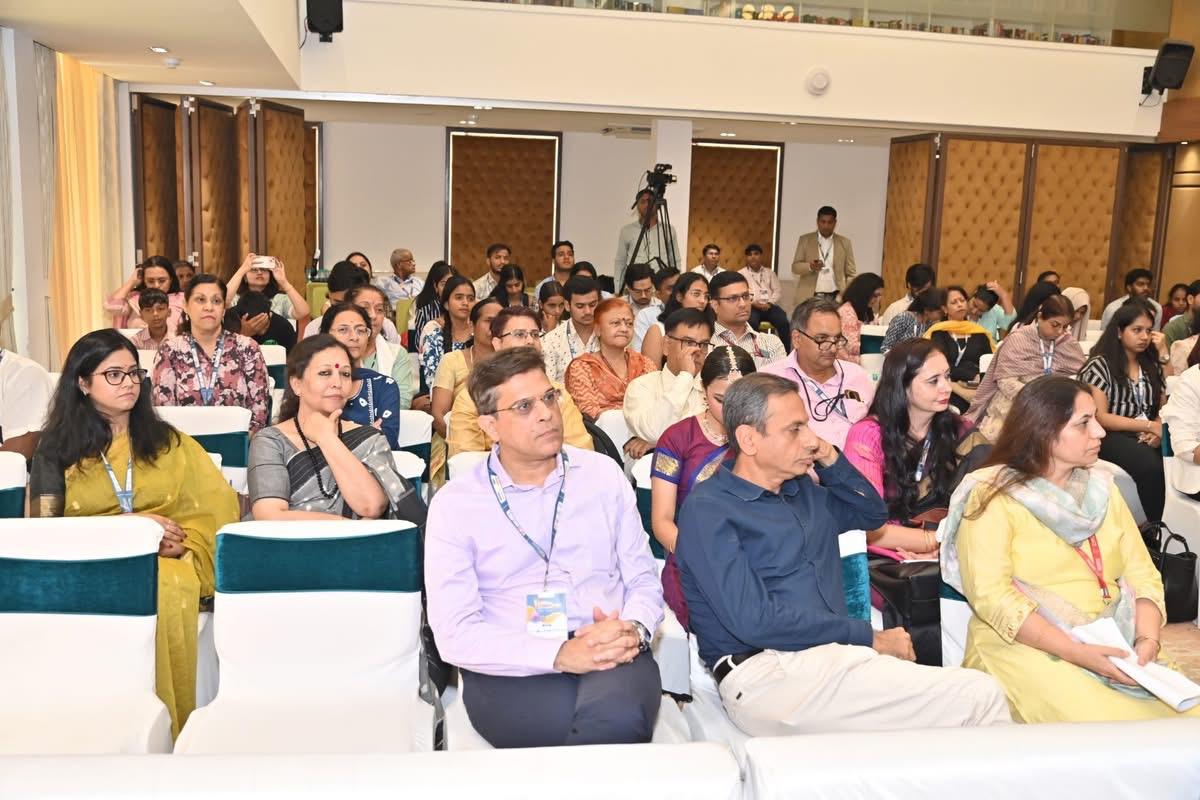
Amyloidosis Event
Our Patron
Dr. Tulika Seth
Dr Tulika Seth is Professor of Haematology at All India Institute of Medical Sciences (AIIMS) in New Delhi, India and leads the technical working group for haemophilia and haemoglobinopathies at AIIMS.
Our Brand Ambassador
MS. Shagun
Shagun is the brand ambassador for the Amyloidosis Support Group of India . Shagun recently performed her Arangetram (solo debut), as shown in a post from Nrityalaya Dance Academy on
Our Founder (CEO)
Prof (Dr.) Satish Chandra
(Prf.) Dr. Satish Chandra, the visionary founder of RDSSDF, also leads ASGI with a deep commitment to transforming amyloidosis care in India. His leadership ensures that ASGI’s initiatives align with RDSSDF’s broader mission, driving impactful change in public health, rural medical outreach, and patient support. Through his efforts, ASGI is fostering greater awareness, early diagnosis, and improved care for those affected by amyloidosis. By bridging gaps in research, healthcare accessibility, and community empowerment, he continues to inspire individuals, healthcare professionals, and policymakers to create a future where no patient is left behind.
Support Us Now
Our Partners

Astra Zeneca

Spotlit India

Vishwa Yuvak Kendra

Dr Lal Pathlabs

Fortis Hospitals
Frequently Asked Questions
FAQ
Why are chemotherapy drugs used to treat AL amyloidosis, even though it’s not a cancer?
AL amyloidosis is caused by abnormal plasma cells (similar to the blood cancer multiple myeloma), so medications for blood cell cancers, like multiple myeloma drugs, are effective at attacking these abnormal cells.
Which medical specialists typically treat amyloidosis?
Doctors who treat amyloidosis often include hematologists (blood specialists) and cardiologists (heart specialists).
What is the main goal of amyloidosis treatment?
The treatment goals are to prevent or slow the buildup of amyloid proteins, manage symptoms, and treat any organ damage.
What factors determine the best treatment plan for an individual with amyloidosis?
The best treatment depends on the type of amyloidosis, the severity of symptoms, and the specific organs affected.
What are the three main types of treatment used for amyloidosis?
The main treatments include chemotherapy, targeted therapy, and organ transplantation, often used in combination.
What is Amyloidosis?
Amyloidosis is a rare disease that develops when abnormal proteins, called amyloid fibers, accumulate in the body’s organs and tissues.